Loading...
First Round of Abstract Submission Ends: Jun 30, 2027
Extended Early Bird Ends: Dec 28, 2026

Plenary Speakers

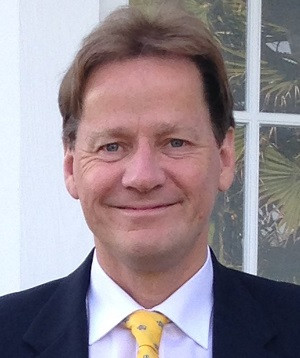
Prof. Eckart Meiburg
University of California, USA
Title: Exploring Sediment Transport Processes via Grain-Resolving Simulations
Eckart Meiburg received his Ph.D.in Mechanical Engineering from the Technical University of Karlsruhe in Germany, in 1986. After a postdoctoral stay at Stanford University, and faculty appointments at Brown University and the University of Southern California, he joined UC Santa Barbara in 2000, where he currently is a distinguished professor of Mechanical Engineering. He is a recipient of the NSF Presidential Young Investigator Award and the Humboldt Senior Research Award, a fellow of the American Physical Society and the American Society of Mechanical Engineers, a past chair of the Division of Fluid Dynamics of the American Physical Society, and he serves as Associate Editor for Physical Review Fluids. He has held visiting positions in France, Switzerland, Australia, New Zealand, Germany and Israel. His research interests lie in the general area of fluid dynamics and transport phenomena, with a focus on multiphase and environmental fluid mechanics.
Prof. Baolin Deng
University of Missouri, USA
Title: To be confirmed
Will Update Soon
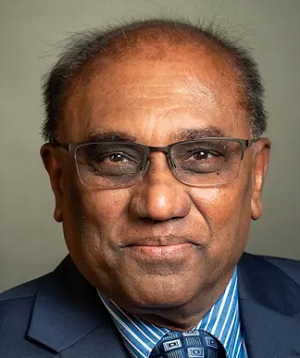
Prof. Pinnaduwa Kulatilake
Christian Brothers University, USA
Title: New Three-Dimensional Anisotropic and Scale Dependent Rock Mass Strength Criteria
Dr. Pinnaduwa H.S.W. Kulatilake has been a Professor Emeritus at the University of Arizona, USA since June 2019. He was a recipient of 2024 International Society for Rock Mechanics and Rock Engineering (ISRM) Science Achievement Award. At present, he is (a) a Professor of Civil Engineering at the Christian Brothers University, USA, (b) a Consultant as a Research Director to Shandong University of Science & Technology, China, and (c) a Visiting Professor at National Institute of Technology, Jalandhar, India. Currently, he serves as the Chair of the ISRM Commission on “Estimation of Rock Mass Strength and Deformability” and as the President of the Sri Lankan Rock Mechanics and Engineering Society. His Ph.D. degree is in Civil Engineering with a Geotechnical Engineering specialty from the Ohio State University, USA. From May 2019 for 3 years he served as a Distinguished Professor of Rock Mechanics and Rock Engineering at a University in China under the Distinguished Foreign Expert 1000 Talent Program funding from the Chinese Government. Prof. Kulatilake has over 47 years of experience in rock mechanics & rock engineering with applications of numerical, probabilistic, and statistical methods to civil, mining, and geoengineering. He has taught 56 short courses covering all 6 continents. He has organized and run 5 international conferences as the Chair. He has published more than 280 papers which have resulted in more than 9500 Google Scholar Citations with an H-index of 57 and an I10-index of 122. He has co-authored a book on “Rock mass stability around underground excavations in a mine” He has edited six conference proceedings and served as the Guest Editor for two special issues in an international journal. He has delivered more than 40 invited keynote lectures and 50 other invited lectures throughout the world. He is a recipient of 14 prestigious awards. He is a registered professional civil engineer and has served for over 20 years as the primary or sole examiner for the geological engineering professional exam conducted by the Arizona State Board of Technical Registration. His research accomplishments resulted in securing invited and elected positions on the editorial boards of several journals. He has been a Visiting Professor/Research Fellow at several top geomechanics institutes in the world.
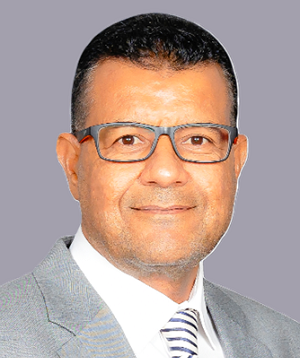
Prof. Mohamed Shahin
Curtin University, Australia
Title: Eco-friendly Ground Improvement for Sustainable and Resilient Civil Infrastructure
Professor Mohamed Shahin is a Professor of Geotechnical Engineering at Curtin University, Australia. He holds BSc and MSc degrees from Cairo University, Egypt, and a PhD from the University of Adelaide, Australia. He has more than 30 years of academic and industrial experience in Civil and Geotechnical Engineering. He is an Elected Fellow of the American Society of Civil Engineers and Engineers Australia. He is recognised among the top 1% of Highly Cited Researchers in Engineering (Web of Science), the top 2% of World Scientists (Stanford University ranking), the top 0.5% of worldwide scholars (ScholarGPS), and Oceania’s top 100 civil engineering scientists (AD Scientific Index). He has received several honours and awards, including the 2025 Senior Researcher of the Year Award (Curtin University); the 2025 Excellent Regional Contribution Award (International Association for Computer Methods & Advances in Geomechanics); the 2023 Scientist Medal (International Association of Advanced Materials); the 2018 Fredlund Award (Canadian Science Publishing); the 2016 Editor’s Choice Paper Award (Canadian Geotechnical Journal); and the 2013 Prix Quigley Award (Canadian Geotechnical Society).
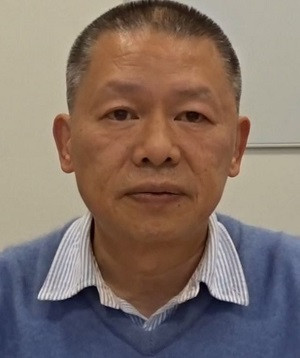
Prof. Nawawi Chouw
The University of Auckland, New Zealand
Title: Impact of the subsoil on the seismic behaviour of structures
Conventional seismic design assumes that, for simplicity, structures are fixed to a rigid ground, even though the ground is not rigid. The ground motion recorded at the ground surface is often used as the load for structural design. These two simplified assumptions can have severe consequences for the structures. During earthquakes, the structural response modifies the arriving seismic waves through interaction between the vibrating footing and the supporting soil. Consequently, the structure experiences earthquake loading rather than the ground motion measured at a free ground surface. Since the response of structures can only be as accurate as the load assumption, the seismic behaviour of structures fixed to rigid support cannot reflect the actual behaviour of structures on the ground. Hence, the performance of the structures, predicted using current conventional approaches, is unreliable. In addition, the assumption that each structure can be considered independent of the surrounding structures also does not reflect reality. The interaction between adjacent structures through their common soil can significantly influence the response of each structure. To have resilient structures and communities, the seismic behaviour of the entire soil-footing-structure systems needs to be incorporated into the seismic design to realistically estimate structural response.
Prof. Andreas Wagner
Karlsruhe University of Applied Sciences, Germany
Title: To be confirmed.
Andreas Wagner is Professor for Building Science and Technology at the KIT Department of Architecture. His main research interests are building performance assessment, solar-based integrated building energy concepts as well as comfort and occupant behavior in buildings.

Andreas Wagner is (co-) author of more than 160 publications as well as 10 books and book chapters respectively, and has (co-) supervised more than 55 doctoral theses so far. From 2018 until 2025, he was Co-Operating Agent of the IEA EBC Annex 79. He was Dean of the Department from 2000 to 2004 and from 2012 to 2015, and he is Vice-Dean for Research since 2016. As a guest scientist, Andreas Wagner has worked at different universities in Berkeley, Sydney, Boulder, Brisbane, Ottawa and Venice.
Prof. Harald Justnes
SINTEF, Trondheim, Norway
Title: Prospects of medium pH concrete in a sustainability perspective
Prof., Dr. Harald Justnes is Chief Scientist at SINTEF Community, Department of Architecture, Building materials and Structures. He was also Adjunct Professor in “Cement and Concrete Chemistry” at Institute of Materials Technology, Norwegian University of Science and Technology for 25 years. His field of interest covers the chemistry of cement, concrete, admixtures and additives (including polymers) from production, through reactivity, to durability. Justnes is author or co-author of more than 380 publications and is among the 2% most cited in his field world-wide.
Prof. A. W. Jayawardena
The University of Hong Kong, Hong Kong
Title: To be confirmed
A. W. Jayawardena, an Adjunct Professor in the Department of Civil Engineering of the University of Hong Kong, has over four decades of experience in academia, consulting engineers, international organizations, and government. He has been a Professor at the National Graduate Institute for Policy Studies, Japan, a Guest /Visiting Professor at Beijing Normal, Hohai and Tsinghua Universities of China, an Honorary Professor in the Department of Statistics and Actuarial Sciences of the University of Hong Kong, and an Adjunct Professor at Vellore Institute of Technology, India. His awards include a Visiting International Fellowship of the ASCE Environmental and Water Resources Institute, an international one from the Japan Society of Hydrology and Water Resources, an invitational one from the Japan Society for the Promotion of Science, and the UNESCO-IHP Asia Pacific Award. He has authored the books ‘Environmental and Hydrological Systems Modelling’, ‘Fluid Mechanics, Hydraulics, Hydrology, and Water Resources for Civil Engineers’, Water for Life: Drinking Water, Health, Food, Energy Nexus', and A Concise History of Japan: Jomon Period to Heisei Period, and authored/co-authored over 200 publications.